
Rising LNG prices raise demand concerns for US export sector
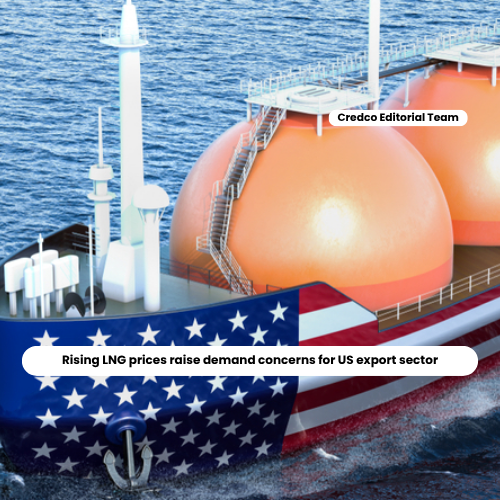
Recent attacks on vessels near the Strait of Hormuz, along with missile strikes on Qatar’s Ras Laffan LNG export terminal, have significantly pushed prices higher. LNG deliveries to northwest Europe for May have exceeded $20/mmBtu this week—more than double pre-conflict levels. While this creates short-term gains for producers, industry participants warn that increased volatility could undermine long-term demand.
Market players highlight that price instability makes it more difficult to secure the long-term contracts required for LNG projects, which are highly capital-intensive. Industry leaders emphasize that consistent and predictable pricing is crucial for governments to commit to LNG as a reliable energy source.
Although prices have not yet reached the extreme levels seen during the 2022 energy crisis, several countries have already begun taking measures to curb energy consumption. Recommendations include reducing transport usage, encouraging remote work, and limiting energy-intensive activities to manage rising costs.
Developers caution that prolonged volatility could lead to deeper demand cuts if high prices persist. Ensuring LNG remains a dependable option is seen as essential to avoid long-term demand erosion.
At the same time, disruptions in the Middle East may increase the attractiveness of LNG assets located outside the region, particularly those perceived to carry lower operational risk. US industry officials expect several large-scale LNG projects to move toward final investment decisions soon, though additional capacity may still be required to meet global demand.
The US government continues to support LNG sector growth through financing and policy measures. Institutions such as the Export-Import Bank are evaluating major projects and have reported increased demand for support related to LNG cargo exports, reflecting the sector’s strategic importance amid shifting global energy dynamics.
Stay ahead of market trends with the Credco app. For any queries, please reach out via WhatsApp at +91 8448083211.
Related on the Wire
- Supply·Tuesday, 27 October 2026
European PVC Producers Prepare Further Price Increases for November Despite Weak Demand
European polyvinyl chloride (PVC) prices continued to rise in the second half of October, although increases moderated as demand remained sluggish and supply stayed comfortable. Most producers scaled back their initial price hike targets of up to €150/ton, with the majority of…
Read story - Supply·Friday, 16 October 2026
Turkey’s PVC Market Loses Momentum as Weak Demand Limits October Price Increases
Turkey’s imported polyvinyl chloride (PVC) market has begun to lose strength following several price increases in September and early October. Persistently weak demand from downstream industries and limited liquidity are increasingly challenging sellers’ firm pricing strategie…
Read story - Supply·Friday, 25 September 2026
China's August S-PVC Exports Surge with Increased Demand from India
China's suspension polyvinyl chloride (S-PVC) exports experienced a notable increase in August, primarily fueled by heightened demand from India. This surge underscores the growing import needs of India and the availability of Chinese exports. India has emerged as a key destin…
Read story - Supply·Thursday, 17 September 2026
Turkey PVC Market Firms as Rising Costs Point to October Price Hikes
Turkey’s PVC market has strengthened in the second half of September as another sharp increase in energy and feedstock costs encourages sellers to target higher prices for October. The latest geopolitical developments, including a reported attack on a major Saudi pipeline, pus…
Read story