
European Natural Gas Surges by 25%, Forecasts Point to Further Flare-Up Risk
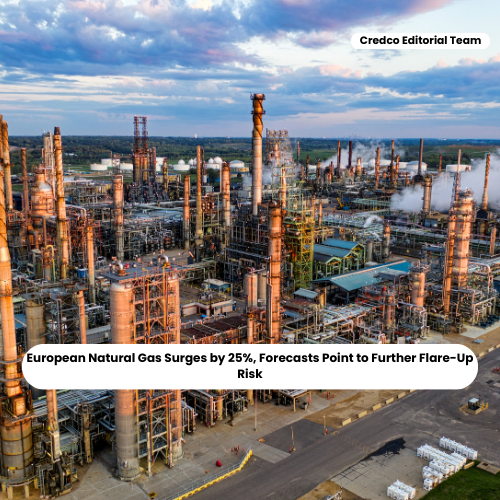
After trading in the €29–30/MWh ($8–9/MMBtu) range in recent weeks, the benchmark contract climbed above €40/MWh ($11.8/MMBtu) on Monday morning before easing back to around €38/MWh. Market focus has now shifted to how long the disruption in the Gulf will last and whether the current spike signals a broader, sustained escalation in prices.
Hormuz Disruption Tightens LNG Outlook
The Strait of Hormuz handles roughly one-fifth of global liquefied natural gas exports, primarily from Qatar. Following the outbreak of hostilities, LNG tankers reportedly delayed or rerouted voyages, while Qatar temporarily suspended maritime navigation. Israel also shut certain gas-producing capacities as a precaution, and Egypt has reportedly sought additional LNG cargoes.
Europe appears particularly exposed. Although winter demand is easing, gas storage levels remain unusually low ahead of the summer refill season. The region will require substantial LNG inflows in the coming months to rebuild inventories before the next heating cycle.
According to Wood Mackenzie, the duration of the Strait’s effective closure will be critical. The longer flows remain constrained, the higher prices are likely to climb. Additional pressure may come from maritime insurers, as more than half of the world’s major shipping insurance clubs are reportedly preparing to suspend war-risk coverage for vessels entering the Persian Gulf, potentially deterring further cargo loadings.
Goldman Warns of 130% Upside in Extreme Scenario
Goldman Sachs estimates that a one-month halt in LNG shipping through Hormuz could push European and Asian spot LNG prices up by as much as 130%, lifting European gas toward $25/MMBtu. In such a case, prices would more than double from recent levels.
A disruption lasting more than two months could drive European gas above €100/MWh (around $29/MMBtu), potentially triggering significant global demand destruction. Analysts added that US gas prices would likely be less affected, given the country’s status as a major net LNG exporter with liquefaction plants already operating near capacity.
Storage Risks Rise Ahead of Refill Season
Dutch transmission system operator Gasunie warned that ongoing attacks and retaliatory measures are likely to heighten nervousness in gas markets and maintain upward pressure on prices. Dutch gas storage levels have reportedly fallen below 11%, making the timing of the price spike particularly challenging as Europe enters the crucial summer refill period.
Analysts at Bruegel cautioned that renewed volatility could complicate storage refill efforts, increasing the risk of tighter supply balances ahead of next winter.
Industrial Costs and LNG Competition in Focus
Rising gas prices threaten to increase industrial energy costs across Europe. BloombergNEF noted that Türkiye, which imports pipeline gas from Iran, could step up spot LNG purchases if regional trade disruptions intensify, adding further competition for available cargoes.
While oil prices have also rallied, several market participants argue that European gas markets are more sensitive to a de facto closure of Hormuz due to LNG’s logistical constraints and Europe’s increased reliance on seaborne supplies following the sharp reduction in Russian pipeline flows.
For now, the market is pricing in a substantial geopolitical premium but not yet a full-scale, prolonged supply shock. Whether prices stabilize or enter a new phase of escalation will largely depend on how quickly shipping through Hormuz resumes and whether the conflict expands further.
Stay ahead of market trends with the Credco app. For any queries, please reach out to us via WhatsApp at +918448083211.
Related on the Wire
- Supply·Tuesday, 27 October 2026
European PVC Producers Prepare Further Price Increases for November Despite Weak Demand
European polyvinyl chloride (PVC) prices continued to rise in the second half of October, although increases moderated as demand remained sluggish and supply stayed comfortable. Most producers scaled back their initial price hike targets of up to €150/ton, with the majority of…
Read story - Polymer·Wednesday, 21 October 2026
European PP Markets Face Uncertainty Over Further November Price Hikes
European polypropylene (PP) markets accepted higher prices in October, with deals concluded €50–100/ton above previous levels across Italy and Northwest Europe. However, weak demand and comfortable buyer inventories prevented sellers from achieving their initial increase targe…
Read story - Polymer·Wednesday, 4 November 2026
Turkey PP and PE Markets Target Further Gains as Prices Reach Four-Month Highs
Turkey’s polypropylene (PP) and polyethylene (PE) markets began November under renewed upward pressure, with initial supplier announcements and higher selling indications suggesting that October’s rally could continue. Despite Brent crude futures falling by more than 7% on Mon…
Read story - Markets·Tuesday, 3 November 2026
European Gas Prices Recover as IEA Flags Lowest Winter Storage in 13 Years
European natural gas prices moved higher on Tuesday, November 3, following a steep decline in the previous session. Market sentiment remained influenced by concerns over limited winter supplies, as the International Energy Agency (IEA) warned that Europe was entering the heati…
Read story