
U.S. Tightens Grip on Hormuz as Blockade Successfully Enforced
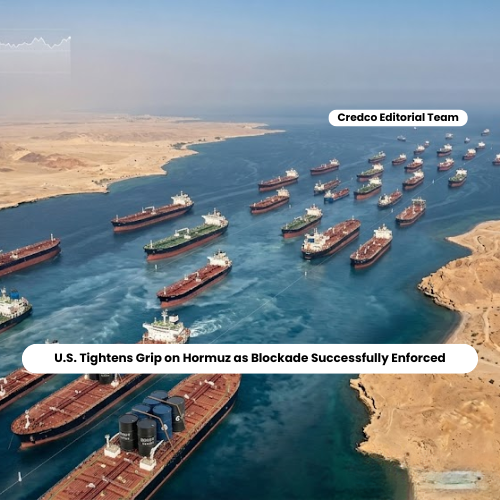
Recent shipping activity indicates that several tankers have been forced to reverse course after approaching the Strait. In one instance, a Chinese-linked tanker briefly exited the Gulf but later returned, marking one of the first real tests of the blockade following the breakdown of U.S.-Iran negotiations.
U.S. military officials have stated that maritime trade linked to Iran has been effectively curtailed, with multiple vessels complying with directives to turn back. Naval forces have also intercepted ships attempting to depart from Iranian ports, reinforcing the strict implementation of the blockade.
Despite these measures, regional shipping dynamics remain complex. Some vessels continue to operate in nearby waters, while others hesitate near the Strait amid uncertainty over enforcement rules and safety conditions.
Traffic through the Strait has dropped significantly compared to pre-conflict levels, when it was one of the busiest oil transit routes globally. Now, vessel movement is limited, with ships facing both U.S. naval oversight and Iranian-imposed conditions, including specific routing requirements and additional costs.
The situation has drawn international attention, with concerns rising over tightening global oil supply and increasing market volatility. While there are ongoing expectations of renewed diplomatic efforts, uncertainty continues to dominate sentiment in energy markets.
For now, the blockade remains a key factor influencing global oil flows, with traders closely monitoring developments that could either escalate tensions further or lead to a potential reopening of the critical waterway.
Stay ahead of market trends with the Credco app. For any queries, please reach out via WhatsApp at +91 8448083211.
Related on the Wire
- Polymer·Thursday, 12 November 2026
China Expands Its Grip on Southeast Asia’s Polymer Import Markets
China has continued to strengthen its position in Southeast Asia’s polymer markets, emerging as the leading supplier of nearly all major polymer grades, with PE remaining the notable exception. The country’s expanding production capacity and growing export availability have si…
Read story - Crude·Friday, 13 November 2026
India Plans $910 Million Strategic Oil Storage Project in Odisha
India is seeking private-sector investors to develop and operate its largest strategic petroleum reserve (SPR) facility, a project estimated to cost $910 million. The proposed development is expected to increase the country's strategic oil storage capacity by around 80%, accor…
Read story - Polymer·Friday, 13 November 2026
European PE Rally Shows Signs of Reversal After Four Months of Gains
European PE markets are showing signs that the price rally, which began in mid-July, may have reached its peak. November transactions were concluded at higher levels, but sellers had to scale back most of their triple-digit increase targets to secure deals. Several market part…
Read story - Crude·Friday, 13 November 2026
European and Asian Naphtha Prices Drop Nearly 20% as Oil Markets Ease
Naphtha markets in Europe and Asia have reversed much of their strong October rally, with prices falling by nearly $180/ton in just two weeks as expectations of reduced tensions in the Middle East have increased. Weekly average prices in both regions have dropped to their lowe…
Read story