
Record-Low Rhine Water Levels Disrupt Germany’s Petrochemical Supply Chain
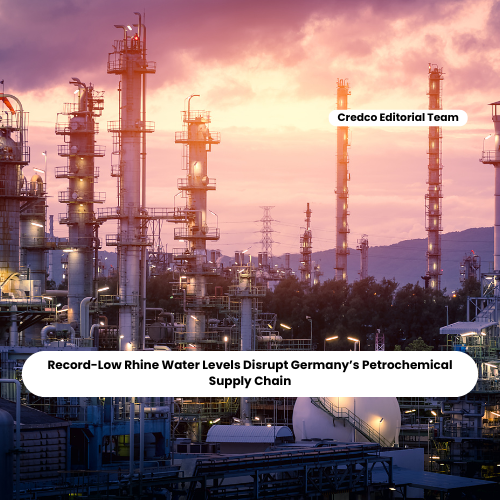
Although river traffic remains operational, many barges are carrying only a small portion of their normal cargo due to shallow water conditions, slowing the movement of raw materials across the region.
Rhine Remains a Key Transport Route
The Rhine serves as one of Europe's most important inland transport corridors, connecting the Amsterdam-Rotterdam-Antwerp (ARA) region with Germany's major petrochemical and refining facilities.
The river is a vital route for transporting naphtha and other feedstocks to several large steam crackers and refineries across Germany. As barge capacity has been reduced, many companies are shifting cargo to rail and road transport despite considerably higher transportation costs.
Freight charges for tanker barges from Rotterdam to southern Germany have risen sharply in recent weeks, reflecting the increasing pressure on inland logistics.
Feedstock Supply Comes Under Pressure
The transport disruption is beginning to affect feedstock availability for German steam crackers, raising concerns over lower operating rates.
Reduced cracker utilization could limit the production of essential petrochemical products such as ethylene, propylene, and crude C4, potentially impacting downstream supply if the low-water conditions continue.
In addition, high river temperatures caused by the ongoing heatwave are reducing cooling efficiency at some industrial facilities, creating further operational challenges during the summer season.
Weather Outlook Remains a Key Concern
The current situation has revived concerns similar to previous low-water events experienced in 2018 and 2022, when restricted river transport disrupted industrial supply chains across Germany.
With dry weather expected to continue into August, market participants are closely monitoring river conditions. Persistently low water levels could keep logistics costs elevated, tighten feedstock availability, and increase pressure on the region's petrochemical supply chain.
Stay ahead of market trends with the Credco app. For any queries, please reach out via WhatsApp at +91 8448083211.
Related on the Wire
- Supply·Wednesday, 4 November 2026
Tightening Supply Drove Up Propylene Prices, Strong Pullback Expected in November
In October, the domestic propylene market in India experienced a significant surge in prices, driven by a notable contraction in supply. This was largely due to concentrated maintenance activities at key production facilities, combined with a spike in restocking demand from do…
Read story - Supply·Friday, 23 October 2026
Asian Ethylene Prices Extend Gains on Higher Feedstock Costs and Tight Supply
Asian ethylene prices continued to strengthen this week, with assessments for both CFR China and CFR Southeast Asia increasing by $10/ton from the previous week. Rising crude oil and naphtha costs, active buying by traders and persistent supply constraints supported the market…
Read story - Supply·Monday, 19 October 2026
Tighter Supply and Higher Costs Lift Southeast Asia’s Import PE Market
Southeast Asia’s import polyethylene (PE) market regained its upward momentum by mid-October after starting the month on a relatively quiet note. Reduced availability and stronger upstream costs gave sellers renewed confidence to increase offers. However, the recovery continue…
Read story - Supply·Thursday, 15 October 2026
Middle Eastern Producer Issues New PP Film Offers to India Amid Tightening Supply
A Middle Eastern producer has recently announced new offers for polypropylene (PP) film to the Indian market. This move highlights the competitive nature of import supplies in the region. However, specific details such as volumes, netback, and buyer responses remain undisclose…
Read story