
PetroChina commissions major gas-based petrochemical complex in Xinjiang
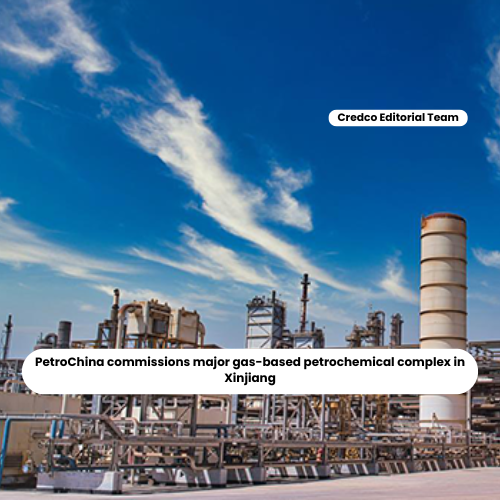
The project includes a 1.2 million tons/year ethylene cracker, along with 1.2 million tons/year of polyethylene (PE) capacity and 450,000 tons/year of polypropylene (PP) capacity. The PE units consist of 300,000 tons/year of LDPE and two HDPE/LLDPE units with a combined capacity of 900,000 tons/year. Commercial production at the complex began in mid-July.
Unlike many of China's coastal petrochemical plants that rely on imported naphtha, the Dushanzi complex uses natural gas liquids (NGLs) sourced from the Tarim Basin as its primary feedstock. This makes it one of the country's largest integrated inland gas-based petrochemical investments.
Supporting China's inland industrial expansion
The startup reflects China's ongoing strategy of diversifying its petrochemical feedstock sources while expanding production beyond its traditional coastal manufacturing hubs. By utilizing domestic natural gas resources from the Tarim Basin, the project strengthens China's gas-based ethylene and polyolefin production capabilities and reduces dependence on imported feedstocks.
Located in Xinjiang, the complex also supports China's broader objective of developing western regions into major industrial centers. Its strategic location enables efficient supply to western China while also serving nearby Central Asian markets.
Potential impact on regional polymer supply
The commissioning of the Dushanzi project highlights China's continued investment in large-scale gas-based petrochemical production using domestic resources. Although producers in North America and the Middle East continue to benefit from lower-cost hydrocarbon feedstocks, the addition of new gas-based capacity in China could gradually diversify the country's raw material mix and lessen its reliance on imported naphtha.
Beyond increasing production capacity, the project may also influence future investment trends within China's petrochemical sector. If similar gas-based complexes are developed, they could reshape regional polyethylene and polypropylene supply dynamics while increasing competition across selected export markets.
Stay ahead of market trends with the Credco app. For any queries, please reach out via WhatsApp at +91 8448083211.
Related on the Wire
- Polymer·Wednesday, 4 November 2026
Turkey PP and PE Markets Target Further Gains as Prices Reach Four-Month Highs
Turkey’s polypropylene (PP) and polyethylene (PE) markets began November under renewed upward pressure, with initial supplier announcements and higher selling indications suggesting that October’s rally could continue. Despite Brent crude futures falling by more than 7% on Mon…
Read story - Supply·Monday, 2 November 2026
Indian Polymer Markets Begin November with Broad Price Increases, PVC Leads
India’s domestic PP, PE and PVC markets started November with notable price hikes, as major producers issued upward revisions effective November 1. Suspension PVC (S-PVC) recorded the most substantial increase, while polypropylene (PP) and several polyethylene (PE) grades also…
Read story - Polymer·Wednesday, 21 October 2026
India’s PP Raffia Prices Rise $80–85/ton Above HDPE and LLDPE Film
India’s polyolefin market has seen a notable shift in price relationships, with Middle Eastern polypropylene (PP) raffia now trading above high-density polyethylene (HDPE) and linear low-density polyethylene (LLDPE) film on a CIF India basis. After remaining cheaper than these…
Read story - Polymer·Monday, 12 October 2026
Indian Producer Raises HDPE Pipe and Select LDPE Prices, Keeps Film Grades Unchanged
A major private-sector petrochemical producer in India has announced selective increases in domestic polyethylene (PE) prices effective October 10. The latest revision raises HDPE pipe prices and selected LDPE grades, while standard film, general packaging and the entire LLDPE…
Read story