
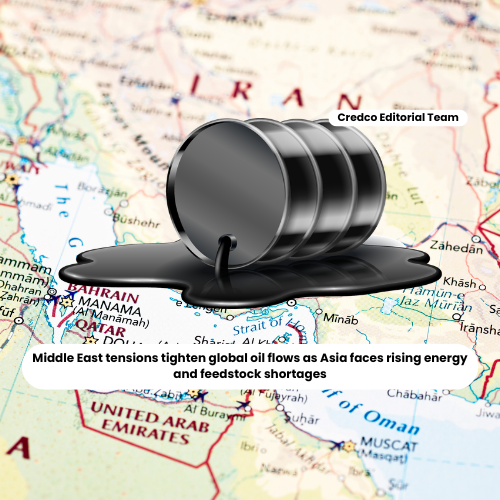
Middle East tensions tighten global oil flows as Asia faces rising energy and feedstock shortages
Industry sources said the impact has gradually expanded from crude oil into downstream products such as naphtha, a vital raw material used in plastics, coatings, electronics, pharmaceuticals, and several manufacturing sectors. Countries highly dependent on imported energy and feedstocks, particularly Japan and South Korea, are facing mounting supply challenges affecting industrial production as well as daily consumer markets.
Global oil inventories are reportedly continuing to decline. Although headline stock levels still appear relatively large, a major portion consists of operational pipeline inventory that cannot easily be redirected into the market. As a result, available commercial supply is moving closer to minimum safety levels, especially in Asia where energy reserves are already comparatively limited.
While temporary optimism surrounding possible geopolitical easing has occasionally pressured oil prices lower, physical crude flows have yet to recover meaningfully. Market participants therefore believe the risk of actual supply shortages remains elevated.
The tightening crude market has also triggered severe pressure in the petrochemical chain, particularly in naphtha availability. South Korea has already seen several chemical producers reduce operating rates because of feedstock shortages, creating delays in manufacturing schedules and adding pressure to downstream industries such as semiconductors and automotive components. Manufacturers are increasingly seeking alternative overseas supply sources to offset shortages.
Japan is also experiencing growing supply strain. Reduced imports of crude oil and naphtha have started impacting both industrial activity and household consumption. Rising packaging raw material costs are reportedly forcing companies to simplify packaging formats and reduce printing complexity, while concerns over potential food price increases are also growing.
In some Japanese cities, shortages of officially approved garbage bags have emerged, leading local authorities to temporarily ease waste disposal rules and allow alternative bag usage. Supply constraints are also affecting the construction sector, where shortages of insulation materials and coatings are pushing project costs higher and delaying certain developments.
The healthcare industry is facing additional pressure as supplies of petrochemical-based medical materials, including syringes and protective consumables, become increasingly restricted. Analysts said the situation is exposing structural weaknesses in domestic energy and chemical supply chains.
Amid tightening supply conditions, several Asian countries are now revising their energy strategies. Because more than 80% of the crude oil and LNG transported through the Strait of Hormuz is directed toward Asia, disruptions along the route are rapidly widening the region’s energy deficit.
To secure electricity generation and industrial operations, a number of countries in South and Southeast Asia have restarted coal-fired power plants and postponed retirement plans for aging coal facilities. Some governments have also delayed natural gas power projects and shifted focus toward domestic coal resources to strengthen short-term energy security.
Asia already remains heavily dependent on coal, with thermal power contributing nearly half of the regional energy mix. Large economies such as China, India, and Indonesia continue to maintain substantial domestic coal production capabilities, making coal a practical fallback option during supply disruptions.
As a result, the pace of decarbonization and clean energy transition efforts across Asia has slowed noticeably. Energy security concerns are increasingly taking priority over low-carbon targets, delaying emissions reduction roadmaps and widening disagreements between developed and developing economies regarding climate responsibilities and financial support.
Looking ahead, market participants believe the Middle East geopolitical situation will remain the key factor shaping global oil and energy markets. Analysts expect Asia’s naphtha shortage and elevated industrial costs to continue in the near term, while Europe and the United States may also face additional energy supply pressure during upcoming seasonal demand peaks.
Until energy flows through the Middle East normalize and global supply chains stabilize, coal is expected to remain a critical support fuel across Asia, potentially extending the timeline for the global low-carbon transition and carbon neutrality goals.
Stay ahead of market trends with the Credco app. For any queries, please reach out via WhatsApp at +91 8448083211.
Related on the Wire
- Crude·Thursday, 22 October 2026
India’s Middle East Crude Imports Rebound 32% in September
India’s crude oil imports from the Middle East recovered to levels last seen before the war in September, supported by increased oil shipments through the Strait of Hormuz. Meanwhile, India’s purchases of Russian crude declined as Chinese buyers increased competition for Russi…
Read story - Markets·Tuesday, 6 October 2026
Asia Petrochemical Market Faces Mixed Trends Amid Cost Pressures
The Asian petrochemical market is experiencing mixed trends following the recent China holiday, with demand expected to remain tepid. According to a report by ICIS, the market is grappling with volatile feedstock and freight costs, which are squeezing downstream margins. This …
Read story - Crude·Thursday, 5 November 2026
Oil Prices Hit Two-Month Lows as US Midterm Results Boost Iran Deal Hopes
Crude oil prices extended their recent losses on Wednesday, November 4, falling by more than 8% to their lowest levels in over two months. The sharp decline followed the US midterm election results, which strengthened expectations that Washington could seek a diplomatic resolu…
Read story - Crude·Tuesday, 3 November 2026
S-Oil’s Shaheen Project Set to Boost Ethylene Capacity Amid South Korea’s Restructuring Push
South Korea’s efforts to restructure its petrochemical industry are facing fresh challenges as S-Oil’s $6.9 billion Shaheen project in Ulsan moves closer to completion. The complex is scheduled to begin commercial operations in 2027 and is expected to add 1.8 million tons/year…
Read story