
EU’s Plastic Waste Export Ban to Reshape India’s Recycling Feedstock Market
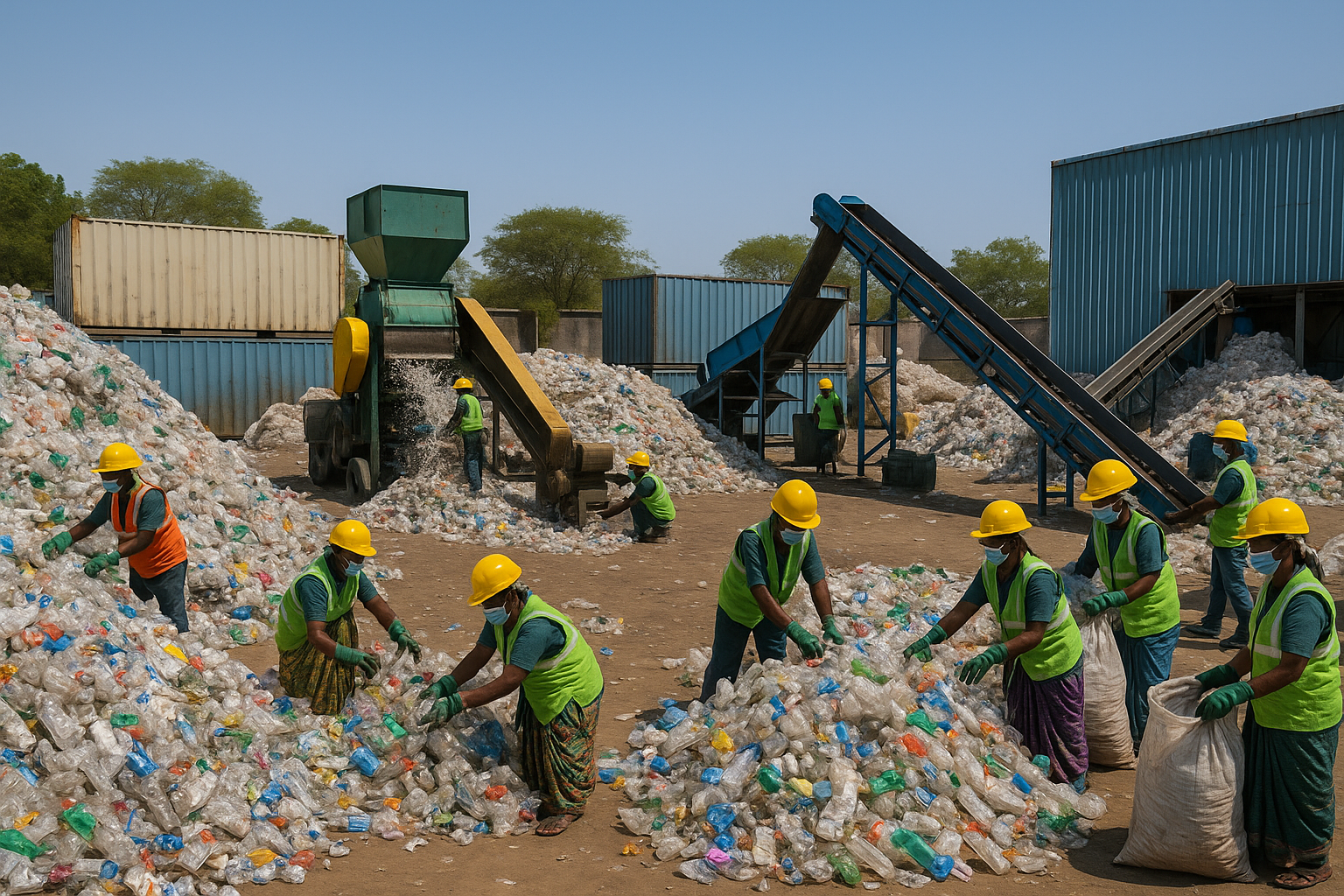
The European Union's decision to ban plastic waste exports to non-OECD countries starting November 21, 2026, is poised to impact India's recycling feedstock market. Although direct exposure for India is limited due to already small EU volumes, Indian recyclers might face increased competition for feedstock from the US, Japan, Canada, and Gulf countries.
This shift could lead to firmer costs for recycled feedstock, prompting some processors to temporarily rely more on virgin polypropylene (PP) and polyethylene (PE) if recycled materials become more expensive. However, no significant price movements in virgin polymers have been reported yet.
The ban may also encourage Indian recyclers to explore new markets and sources for recycled polymers, as the global recycling trade adjusts to these regulatory changes. As the market adapts, Indian processors and recyclers will need to stay agile in sourcing strategies to maintain competitiveness.
Stay ahead of market trends with the Credco app. For any queries, please reach out via WhatsApp at +91 8448083211.
Related on the Wire
- Polymer·Friday, 30 October 2026
China’s PP Raffia Export Offers Surge Beyond $1,400/ton FOB
China’s homo-PP raffia export market has continued its upward movement for another week, with offers crossing the $1,400/ton FOB mark for the first time since market tracking began in January 2021. The latest increase follows indications from late last week that Chinese suppli…
Read story - Polymer·Wednesday, 28 October 2026
China’s PP Raffia Export Prices Surge Past $1,400/ton FOB
China’s homo-PP raffia export market has extended its upward momentum for another week, with offers exceeding the $1,400/ton FOB mark for the first time since market tracking began in January 2021. The latest increase follows indications from late last week that some Chinese s…
Read story - Polymer·Monday, 26 October 2026
War-Driven Cost Increases Weaken China’s PP and PE Export Competitiveness
China’s position as an alternative supplier helping Southeast Asia manage polyolefin supply disruptions has changed significantly since the US-Iran conflict began earlier this year. Initially, Chinese producers helped compensate for reduced Middle Eastern shipments. However, t…
Read story - Polymer·Friday, 23 October 2026
Rising Costs Weaken China’s PP and PE Export Competitiveness
China’s position as a key supplier helping Southeast Asia cope with polyolefin supply disruptions has shifted significantly since the US-Iran conflict began earlier this year. Initially, Chinese producers helped replace some of the Middle Eastern volumes lost to disrupted ship…
Read story