
Oil markets on edge as Trump’s Iran deadline raises escalation risks
At the time of writing, WTI crude was trading at $98.61, up 0.39%, while Brent crude edged slightly lower by 0.24% to $111.90 per barrel. Despite limited price movement, market sentiment remains highly tense, with traders preparing for significant volatility.
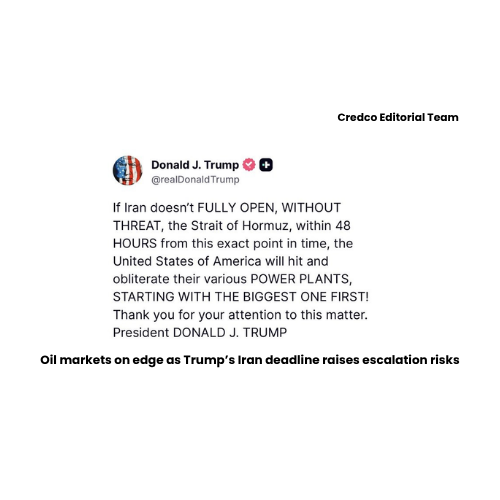
Over the weekend, US President Donald Trump issued a strong ultimatum, warning that the United States could strike Iran’s power infrastructure within 48 hours unless the Strait of Hormuz is fully reopened. In response, Iran warned that any attack on its energy assets would trigger retaliation targeting critical infrastructure, energy facilities, and oil installations across the region. Iranian officials also indicated that financial entities supporting US military actions could be considered legitimate targets.
The deadline for this ultimatum, falling late Monday US time, is expected to act as a key trigger for market volatility. The situation has already escalated, with reports of intensified airstrikes and ongoing military activity across the region following continued hostilities over the weekend.
This development has heightened fears that the conflict could expand beyond military targets into broader attacks on economic and civilian infrastructure. Reflecting these concerns, senior energy executives have begun altering plans, with key industry leaders canceling or adjusting participation in major international energy events.
In parallel, global institutions are preparing contingency measures. The International Energy Agency has indicated readiness to coordinate the release of emergency oil stocks if required, while emphasizing that reopening the Strait of Hormuz remains the most critical step toward stabilizing markets.
The uncertainty has also impacted broader financial markets, with equities in Asia opening lower as investors shift toward a risk-off stance amid escalating tensions.
For oil markets, the ultimatum has introduced a clear timeline for potential escalation. The possibility of direct US strikes on Iranian energy infrastructure—and the likelihood of retaliatory actions—poses a significant threat to regional energy flows, keeping markets highly sensitive and volatile in the near term.
Stay ahead of market trends with the Credco app. For any queries, please reach out via WhatsApp at +91 8448083211.
Related on the Wire
- Crude·Monday, 28 September 2026
Oil Prices Rebound as Trump Rejects Iran Peace Proposal
Oil prices moved higher on Monday after US President Donald Trump rejected a peace proposal put forward by Iran, increasing uncertainty around diplomatic efforts to resolve the conflict and keeping concerns over Middle Eastern oil supplies elevated. Iran had submitted the prop…
Read story - Crude·Thursday, 5 November 2026
Oil Prices Hit Two-Month Lows as US Midterm Results Boost Iran Deal Hopes
Crude oil prices extended their recent losses on Wednesday, November 4, falling by more than 8% to their lowest levels in over two months. The sharp decline followed the US midterm election results, which strengthened expectations that Washington could seek a diplomatic resolu…
Read story - Crude·Tuesday, 3 November 2026
Crude Oil Slides Over 7% as US-Iran Talks Raise Hopes for Peace
Crude oil prices recorded a sharp decline on Monday as renewed diplomatic initiatives between the United States and Iran raised expectations of a possible end to the eight-month conflict. The developments eased fears of further interruptions to energy supplies from the Middle …
Read story - Crude·Monday, 2 November 2026
Crude Oil Slides Nearly 3% as Iran Diplomacy Reduces Supply Risk
Global crude oil prices dropped sharply on Monday, November 2, giving back part of the gains recorded at the end of October. Renewed diplomatic efforts to resolve the US-Israeli conflict with Iran eased immediate concerns over supply disruptions, although ongoing instability i…
Read story