
Shipping Through Hormuz Slows Again Amid Fresh Tensions and Vessel Seizure
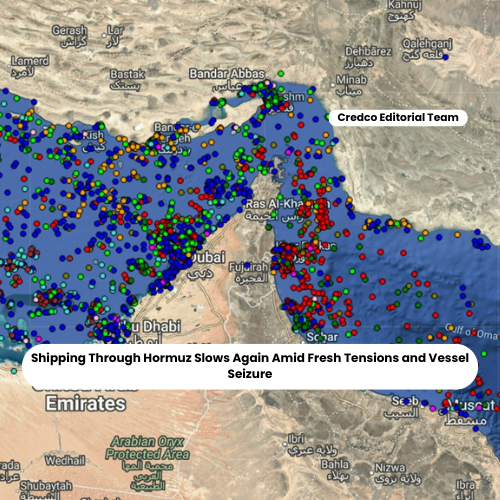
Earlier signs of easing came after both the United States and Iran indicated that transit could resume under a temporary ceasefire, encouraging some vessels to approach the strait. This had briefly improved sentiment and weighed on oil prices. However, the situation reversed sharply after new developments escalated tensions.
A key trigger was the interception of an Iranian cargo vessel by U.S. naval forces near the Gulf of Oman, marking the first such action since the current blockade began. The incident has raised serious concerns among shipowners about the safety of operating in the region.
Adding to the uncertainty, separate security incidents were reported near Omani waters. A tanker was reportedly approached and fired upon by naval units, while another vessel sustained damage after being hit by an unidentified object. Fortunately, no injuries were reported, but the events have further shaken confidence in safe passage through the area.
Although Iran had initially stated that the strait would remain open during the ceasefire period, officials later indicated that transit would again be tightly regulated under military oversight. This shift, combined with the ongoing U.S. naval presence, has created a highly controlled and unpredictable environment.
As a result, several vessels that had begun moving toward the strait have either slowed down, halted, or reversed course. LNG carriers and other large vessels are also delaying transit decisions until clearer guidance emerges.
With the ceasefire timeline nearing its end and conditions on the ground continuing to fluctuate, shipping activity is expected to remain cautious. Market participants are closely watching developments, as any further escalation could prolong disruptions in one of the world’s most critical energy corridors.
Stay ahead of market trends with the Credco app. For any queries, please reach out via WhatsApp at +91 8448083211.
Related on the Wire
- Markets·Saturday, 19 September 2026
Europe-Gulf Road Freight Expands as Hormuz Disruptions Prolong Shipping Delays
Ongoing disruption around the Strait of Hormuz is encouraging more companies to shift cargo from sea to road between Europe and the Gulf. Logistics providers are expanding overland services through Turkey as businesses place greater emphasis on reliable delivery despite signif…
Read story - Crude·Wednesday, 4 November 2026
India’s Reliance Oil-to-Chemicals FY Q2 Earnings Surge Amid Polymer Market Challenges
Reliance Industries reported a significant 68% increase in its oil-to-chemicals segment earnings for the fiscal second quarter, driven by improved margins. This comes amid a challenging environment for the Indian polymer market, where domestic demand fell by 3.5% year-on-year …
Read story - Crude·Tuesday, 3 November 2026
S-Oil’s Shaheen Project Set to Boost Ethylene Capacity Amid South Korea’s Restructuring Push
South Korea’s efforts to restructure its petrochemical industry are facing fresh challenges as S-Oil’s $6.9 billion Shaheen project in Ulsan moves closer to completion. The complex is scheduled to begin commercial operations in 2027 and is expected to add 1.8 million tons/year…
Read story - Markets·Tuesday, 3 November 2026
Iran Releases Nuclear Emergency Survival Guidance Amid Rising US Strike Speculation
Iran has issued an unusual public guide outlining how citizens should respond in the event of a nuclear explosion, including instructions on seeking shelter, limiting exposure to radioactive fallout and preventing contaminated air from entering buildings. The advisory comes am…
Read story